Look and feel
Theme, brand and art; every other module draws from these.
M1
M1Theme
The shop's colours, type (Latin, Thai, Chinese), shape and motion, drawn from its brand.
M2
M2Brand kit
The logo as clean SVG, its animations, icons and share images.
M3Assets
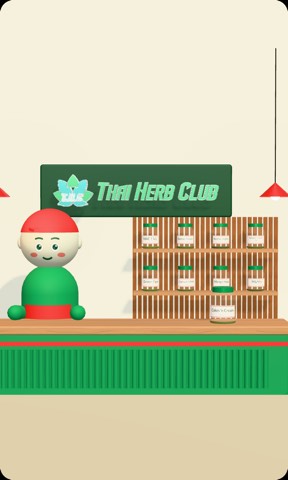
The art every page draws from: photo pools, icons, illustrations, 3D, video loops.
"Oh you did the little weird symbol at the back in the bud tender, that is really cool 3D animation" · Shaan, 24 Oct, 23:00
M12
M12Page transitions and loader
Page transitions and the first-load moment.
On every page
Gate, header, footer, agent: the frame around every page.
M6
M6Compliance
The 20+ age gate, privacy, legal pages and ad-law copy rules.
"some of them are a bit schloppy though, but it's alright" · Shaan, 24 Oct, 22:05
M7
M7PWA and performance
Feels like an app: install guide, offline page, bottom dock, speed on Thai 4G.
"Oh yeah, the header and bottom bar is much better now" · Shaan, 24 Oct, 23:00
M9
M9Header and nav
Logo, page links, open-now pill, language, the one main action, search.
"Oh yeah, the header and bottom bar is much better now" · Shaan, 24 Oct, 23:00
M10
M10Footer
The last word on every page: contact, hours, socials, ask, the brand signing off.
"It's alright, might need some work though" · Shaan, 24 Oct, 22:05
M11
M11Agent
The budtender: a face, a chat and answers in the visitor's language.
"This is a good base ... I wouldn't call this world class ... it still feels very vibe coded" · Shaan, 24 Oct, 23:40
M13
M13Announcement/deals ribbon
One line across the top for news: tonight's event, a holiday closing, a new strain.
M37
M37404
A lost link still lands somewhere useful.
M52
M52In the shop now / Browsing from home
One switch on Home: browsing from home leads with the menu and the way here; in the shop now leads with your list and today's games. It flips by itself at the door, only if the visitor allows location.
A first-timer at 11pm needs 'open now, how to buy'; a regular at noon needs today's menu.
missingrules: yes
Get found
Before the visit: Google, Maps, AI assistants, other languages.
M5
M5SEO and meta
Titles, descriptions, LocalBusiness and Product data, sitemap.
M39
M39AI answer kit
Makes ChatGPT, Gemini and Perplexity name the shop correctly: llms.txt, a facts.json, FAQ and LocalBusiness data.
Travellers now ask an AI assistant 'best weed shop near Nana' before Google. If the facts are not machine-readable, the assistant guesses or names a rival.
missingrules: yes
M40
M40Near-here pages
Three to five honest pages: 'near Asok BTS', 'near Terminal 21', 'from the Grande Centre Point', each with the real walk.
'Near me' and 'near my hotel' searches decide most first visits; a page per real landmark wins them with no ad spend.
missingrules: yes
M41
M41Maps sync
A scheduled script refreshes rating, review count, hours, photos and attributes from Google Maps and lists what changed for the owner.
7,297 of 18,433 licensed shops closed by the end of 2025 (ANN, 6 Jan 2026): 'is it still open?' is a real fear, and the site and Maps disagreeing loses the visitor. The sync also feeds trust, visit, footer and gallery.
missingrules: yes, within free limits6 open points
M49
M49China-ready kit
Amap and Baidu links with the right coordinates (GCJ-02), WeChat and Alipay notes, Chinese copy, a Xiaohongshu-ready share image.
Chinese visitors are the largest group in Bangkok and Google Maps does not work for them.
missingrules: yes
Is this the place?
The first screen and the proof: legal, real, safe, good.
M14
M14Hero
The first screen: in three seconds, is this the place for me?
"Looking at this first screen, um, that one's alright, buttons are too big, nowhere near world class" · Shaan, 24 Oct, 23:00
M18
M18Reviews and trust
Proof the shop is legal, real, good and fair.
"some of them are world class, some of them not really, like there's a level beyond this, which goes broader and deeper" · Shaan, 24 Oct, 23:45
M22
M22About teaser/story
The shop's story in one band on the home page.
M23
M23Gallery/vibe
The shop and its street in pictures.
M29
M29About page
Who runs the shop and why it exists.
"Like the about page is horrid" · Shaan, 24 Oct · earlier version
M44
M44Provenance and lab facts
For each product: the GACP-certified grower with certificate number and expiry, batch, harvest date, Thai-grown, and a lab result where one exists (voluntary, labelled so).
Where is the flower from, is it imported, is it tested: fear 11 in the tourist scan. Flower must come from a GACP-certified site and imports are banned (Tilleke; Theo-Courant), so a shop that shows its grower proves both.
missingrules: yes
Choose what to buy
What they have, what it does, what it costs.
M15
M15Shop by moment and aroma
Pick by moment and aroma (daytime, evening, anytime; citrus, earthy, sweet). No effect words.
"shot by effects is nice but we can't have the same SVGs there" · Shaan, 24 Oct
M16
M16Products teaser
A taste of the menu on the home page.
"Menu, yeah, mildly better The shell is good, I wouldn't say like What anywhere near best in the world Low key, our originals might have even been better" · Shaan, 24 Oct, 23:00
M25
M25Menu/shop page
The full menu: filter, search, sort, ask.
"Menu, yeah, mildly better The shell is good, I wouldn't say like What anywhere near best in the world Low key, our originals might have even been better" · Shaan, 24 Oct, 23:00
M26
M26Product page
One product: what it is, what it does, ask about it, find it in store.
M27
M27Strain library and strain pages
Every strain explained, shared across all shops.
M35
M35Deals page
Deals, where the law allows them.
M45
M45Fair price and your money
Shows a price range per gram for the area and today's price in the visitor's currency.
Tourists fear being overcharged; a shop that shows the going rate and the conversion earns the walk-in.
missingrules: partlylaw risk
M46
M46My list and counter card
Save picks on the phone, then show staff one big Thai and English card: names, grams, questions.
Bridges browsing and buying across the language gap; the visitor walks in knowing what to ask for. The composer already has a 'pick' page.
missingrules: yes
Ask and learn
Every question answered before they walk in.
M20
M20FAQ
The questions every visitor asks, answered in the budtender's voice.
"also the frequently asked questions I was thinking like this is cool but like how would we make this globally world's best" · Shaan, 24 Oct
M21
M21Blog teaser
The newest guides and posts on the home page.
M24
M24LINE add-friend / newsletter
Add the shop on LINE or follow it, the channel Bangkok shops actually answer.
M30
M30Contact page
Every way to reach the shop, with quick answers first.
"the contacts cool but it would be nice if we actually had like a bit more visual stuff" · Shaan, 24 Oct
M31
M31Blog
Guides and posts that bring search visitors and answer real questions.
"the blog components that we made it's all right it's good because it's distilled from our other stuff" · Shaan, 24 Oct · earlier version
M32
M32Learn/guides
Plain guides: first time, dosing, strains, Thai rules.
"the learn, learn's alright, but I feel like if we had more images, it'd be way cooler" · Shaan, 24 Oct
M33
M33Visitors/tourists page
Everything a tourist needs: rules, prescription, passport, where you may smoke.
M36
M36Legal/privacy/credits
Privacy, terms and credits for every photo and font.
M42
M42Law, prescription and safety card
One dated, sourced card: tourists need a Thai prescription (PT33) for flower, foreign ones are not recognised, 30-day supply, passport, no smoking in the shop or in public, never take it home or on a flight, dose and aftercare.
Can a tourist buy at all, and how do I get a PT33, are the top two questions in about 20 sources read (TAT 26 Jun 2025; Tilleke 3 Sep 2025). A wrong answer is the biggest risk to the visitor and to the shop's licence, and the draft Cannabis Control Act (cabinet, 22 Sep 2026) will change it again.
missingrules: yes
M43
M43First visit, step by step
Five photos and five lines: passport at the door, the consult with the on-site practitioner (PT33), choosing up to a 30-day supply at the counter, paying, and where you may and may not smoke after.
Is a doctor really on site, what does the consult cost, will I be turned away: fears 2, 9 and 14 of 15 in the tourist scan. No Bangkok shop shows the steps; Boerejongens publishes house rules.
missingrules: yes
Get there
Open now, how far, which door.
M17
M17Branches
Where it is, open now, how to get there, which door.
"Visit page is better Wow, these, I tell you what, yeah, these API agents are really good at UI" · Shaan, 24 Oct, 21:50
M28
M28Branch pages
One page per branch with its own map, hours and door.
M47
M47Practicalities
One strip of small facts: card or cash, the consult fee and how long it takes, languages spoken, Wi-Fi, ATM and 7-Eleven nearby.
These small doubts decide between two shops on the same street.
missingrules: yes
M48
M48Around us
A small map of what is near: food, coffee, the night market, the hotel strip.
Visitors plan an evening, not a purchase; a shop that helps plan it gets chosen and remembered.
missingrules: yes
M50
M50Save-it kit
Save the shop for later: contact card, calendar entry, offline trip card, Wallet pass.
Most visitors find the shop hours before they go; what they save, they visit.
missingrules: partly
M51
M51Calendar and special hours
Thai holidays, special hours, events and closures, as a page, as structured data and as .ics.
Turning up to a closed shutter on a Buddhist holiday loses the visitor for good.
missingrules: yes
In the shop and after
The counter, the visit, coming back, telling friends.

M19Visit flow and games
Small games that bring people in and back: wheel, jar, crank, stamps.
"the spin the wheel's alright, but some of the other ones are slop though" · Shaan, 24 Oct · earlier version
M34
M34Recognition
Recognition only: the passport stamps and a welcome back. No rewards, prizes or perks.
M53
M53In-store screen
A /screen page for the TV behind the counter: today's menu, strain cards, the QR to the site.
Turns the site into the shop's menu board with no extra hardware cost; the composer already lists a 'screen' page.
missingrules: yes
M54
M54Print kit
Files to print: QR posters, counter stand, stickers, the menu PDF, the taxi card.
Bridges the street and the site; the window QR is how a walker-by becomes a visitor.
missingrules: yes
M55
M55Share card
A good-looking card per page and a share button, so a friend can send the shop in one tap.
Travellers decide in groups; the shop gets chosen in the group chat.
missingrules: yes
M59
M59Social wall
The shop's latest Instagram or TikTok posts on the site.
Shows the shop is alive this week.
missingrules: partlylaw risk
Owner and upkeep
Keeps every site true with no staff time.
M4Content and data
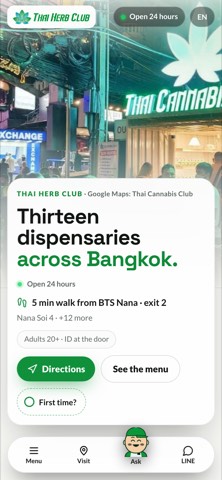
The shop profile and industry packet every site is composed from; translations and copy banks.
M8
M8Analytics
Cookie-free visit counts and a monthly note to the owner.
M38
M38Export to the client's GitHub + Cloudflare
Ships the site to the shop's own GitHub and Cloudflare account.
M56
M56Owner studio
The owner claims the site and edits facts, photos and menu through a simple form that commits to their own repo.
The owner knows the truth (lab results, events, prices); a git-based editor lets them fix it without us.
missingrules: only via git
M57
M57Self-check
A weekly script per site: dead links, stale facts, law-file change, speed budget, licence expiry date.
At hundreds of sites nobody can look; the site must tell us when it is wrong.
missingrules: yes
M58
M58Before and after pitch
Shows the owner their current site beside ours, with the numbers that differ.
The fastest sale is the shop seeing itself better (IDEAS-OPUS idea 1).
missingrules: yes
Theories
From map/THEORIES.md: Shaan's or anyone's.
T1
T1Tonight's pick
One strain the shop recommends tonight, picked by a daily script from what is in stock, shown on the first screen and in the footer.
Gives a first-timer one easy answer and gives regulars a reason to look again.
theory
T2
T2Costly-signal proof
Shows what a fly-by-night shop could not fake: years at the address, licence history, the same staff in photos across years.
Visitors trust what is expensive to fake more than any badge.
theory
T3
T3LINE sticker set
A free sticker set of the shop's budtender face, offered when someone adds the shop on LINE.
Puts the shop's face in Thai group chats every day.
theory
Other
M60
M60App tour
a how-to-use video per shop, phone 1080x1920 and wide 1920x1080, filmed from the composed site and cut in the shop's logo, colours and type; 1 recorder; 2 determinism; 3 template; 4 renderer; 5 one command. Spec `modules/M60-app-tour.md`, code `app-tour/`